


We are back to where we started from this week in our journey around Victorian Friar Street. This is number 14 (the southerly quarter of today’s Greyfriars, using the “old” style street numbering – pun unintentional here). At that time it was the establishment of a Mr Robert Old. The clarity and detail of this image is fantastic. For once it is easy to read the shop sign on the side wall, the writing on the windows. Even the wording above the shop door and window is just about readable. The stone wall on the right hand edge of the photo is of course that of the old city gaol. By this time the gaol had been repurposed as the original Laslett’s almshouse. The building shown pre-dates the mock-Tudor building that stands there today.
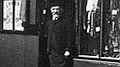
Barring any intelligence to the contrary the man on the threshold has to be Mr Robert Old himself. In 1900 (the date Changing Face of Worcester – https://www.cfow.org.uk/ – give for this image), he would have been in his 76th year. His business was at this location from around 1892 to 1901. After this he moved to other premises in Friar Street. By the time of Robert Old’s death in 1903 he had left Worcester and was living in Kings Norton.
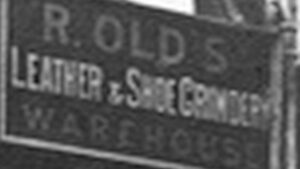
We were intrigued if not a little amused (no sniggering please) at his line of business “Leather & Shoe Grindery”. The term grindery is no longer in common parlance. After a bit of background reading it seems that grindery here pertains to leather working equipment and materials. Sometimes the term used is crindery but the meaning seems to be the same. This suggests he did various types of leather repairs, presumably including boots and shoes. One other definition of “grindery” is for somewhere where knives and such like are sharpened. Take your pick.
References
Images taken from the Changing Face of Worcester website. The definition of grindery/crindery taken from various online dictionaries.